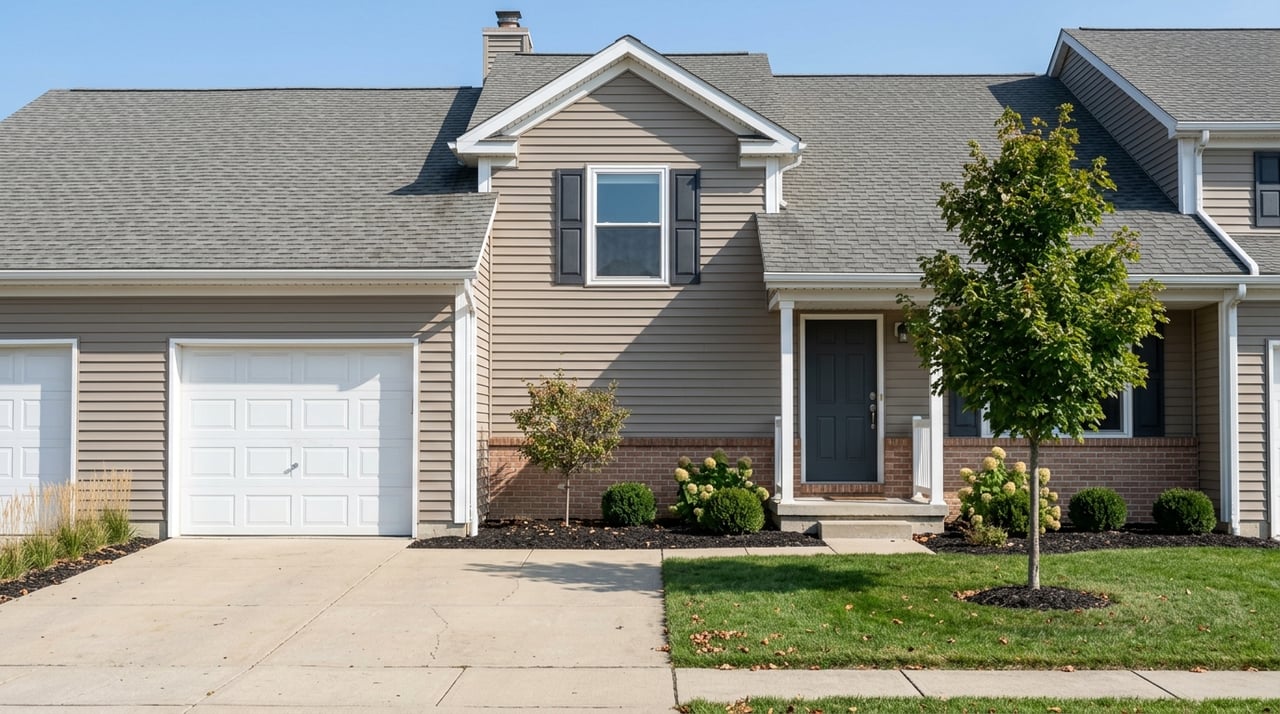
If Naperville prices have you reworking your budget, Aurora may be the suburb that helps you stay in the game. Many buyers want more breathing room without giving up access to trains, highways, and a wide range of housing choices. The good news is that Aurora offers a lower entry point than Naperville in many cases, but you still need to shop carefully because price, taxes, and school assignment can change a lot by address. Let’s dive in.
Why Aurora Feels More Affordable
Aurora stands out because it often gives you a lower purchase price than nearby suburban markets, especially compared with Naperville. In March 2026, Aurora’s median sale price was $325,000, compared with $538,500 in Naperville. That gap is large enough to put Aurora on the radar for first-time buyers, relocators, and anyone looking for more value.
Aurora also came in below North Aurora’s $390,000 median sale price and close to Elgin’s $330,000 median. That means Aurora is not necessarily the cheapest option in every direction, but it does sit in a more accessible price tier than many buyers expect. If you have been focused only on Naperville, Aurora may open up more realistic choices.
Price per square foot tells a similar story. Aurora was at $213 per square foot, while Naperville was at $266. That difference can matter if you are trying to balance space, monthly payment, and location.
Aurora Is Not One Price Point
One of the biggest mistakes buyers make is treating Aurora like a single, uniform market. It is a large city that stretches from Route 59 on the east to beyond Orchard Road on the west, and the housing picture changes across that footprint. Your budget may go much further in one part of Aurora than another.
Recent neighborhood-level data show that spread clearly. West Side had a median sale price of $295,000, Southeast Aurora was $270,000, and West Aurora was $374,500. Those numbers show why a broad search for “homes in Aurora” is only the starting point.
Aurora also has a mixed housing stock. Market data tracks single-family homes, townhomes, and condos or co-ops separately, which is a helpful reminder that you are not shopping one product type. If affordability is your top priority, expanding your search to include townhomes and condos may create more options.
Compare Monthly Payment, Not Just Price
A lower list price does not always mean a lower monthly payment. In Aurora, property taxes can vary meaningfully from one parcel to another based on the exact taxing district mix. That is why two homes with similar prices can feel very different once you look at the full payment.
Kane County says tax rates are based on assessed value and local taxing-body levies, and general county tax rates range from about 6.50% to 11.25%, with a median rate of 9.00%. The county’s 2024 tax-code booklet includes Aurora parcel examples with total rates such as 6.550526, 6.855173, 7.918022, and 8.946233. In plain terms, taxes are highly address-specific.
Homestead exemptions can also reduce taxable value before taxes are calculated. That can help, but it does not change the fact that buyers should review taxes carefully on each home. The smarter move is to compare estimated monthly payment, not just sale price.
Why Address Details Matter in Aurora
Aurora spans DuPage, Kane, Kendall, and Will counties, and the city says six school districts fall within city limits. That makes Aurora different from suburbs where buyers can rely on one citywide assumption about taxes or school assignment. In Aurora, details matter at the property level.
If you are relocating, this is especially important. You may find two homes that look similar online, but one may fall into a different county, tax code, or school district than the other. That can affect both your monthly cost and how well the home fits your day-to-day routine.
This is one reason local guidance matters when you are trying to buy smart. A focused search based on your budget, commute, and preferred housing type usually works better than casting a wide net across the whole city.
School Districts Are Address-Specific
Aurora is not served by one single school district. West Aurora School District 129 serves Aurora and nearby communities including North Aurora, Montgomery, Sugar Grove, and Batavia. East Aurora School District 131 covers 13 square miles on Aurora’s east side, and Indian Prairie School District 204 serves students in Aurora, Naperville, Bolingbrook, and Plainfield.
For buyers, the main takeaway is simple. You should verify school assignment by address rather than assuming it based on the city name alone. Aurora’s official city information also notes that school district maps are available through the city.
District information can also help relocating buyers understand the broader community context. District 129 says students speak roughly 50 unique languages, and District 204 says about 41% of students come from homes where a language other than English is spoken. That reflects the broad range of households and backgrounds across the area.
Commute Access Adds Value
Aurora’s affordability story is not just about sticker price. It is also about access. For many buyers, Aurora works because it combines a lower entry point with solid transportation options.
The city’s transportation information highlights Metra BNSF rail, Pace buses, and the Illinois Tollway. Aurora is also accessible through five interchanges on the East/West Tollway corridor. That gives buyers more than one commuting path, which can be a major plus if your work schedule or destination changes.
Metra’s Aurora station at 233 N. Broadway offers BNSF service, Pace connections, and 1,631 parking spaces. The BNSF line also serves the Route 59 station in Aurora. If train access matters to you, that can widen the number of homes worth considering.
Road access remains a key part of Aurora’s suburban appeal too. Illinois Tollway project updates in and near Aurora, including work around Farnsworth Avenue and the Prairie Path underpass area between Eola Road and Route 59, reinforce that Aurora functions as a highway-access suburb with multiple routes in play.
What Buyers Should Look For
When you are searching for affordable suburban homes in Aurora, it helps to stay focused on the numbers that shape your real-life budget. A home that looks affordable online may not be the best fit once taxes, commute, and property type are factored in.
Start with these priorities:
- Set a full monthly budget, not just a purchase price target
- Compare taxes home by home, especially if you are looking across different parts of Aurora
- Verify school district by address rather than by city name
- Consider multiple property types, including townhomes and condos
- Map your commute options, including Metra, Pace, and tollway access
- Expect competition, since Aurora homes were still averaging about 3 offers and selling at 100.1% of list price
That last point matters. Aurora is more affordable than Naperville by median price, but it is not a bargain-bin market. Homes are still moving at a steady pace, with a median market time of 43 days.
Aurora vs. Naperville at a Glance
| Market | Median Sale Price | Price Per Sq. Ft. | Median Market Time |
|---|---|---|---|
| Aurora | $325,000 | $213 | 43 days |
| Naperville | $538,500 | $266 | 46 days |
| Elgin | $330,000 | Not provided | Not provided |
| North Aurora | $390,000 | Not provided | Not provided |
This comparison helps explain why so many buyers expand their search into Aurora. You may be able to find a lower entry point while still staying connected to the western suburbs.
How to Search More Strategically
If you want to find value in Aurora, broad browsing is not enough. The better approach is to narrow your search around the tradeoffs that matter most to you. That usually means balancing home style, tax exposure, and commute convenience.
For example, one buyer may decide that a townhome near a Metra option is the right fit. Another may want a single-family home farther west where price bands look different. Neither approach is automatically better. What matters is matching the home to your priorities instead of chasing the lowest list price.
This is where a guided search can save time and frustration. When you understand Aurora as a collection of different price bands, tax situations, and commute patterns, the market becomes much easier to navigate.
If you are weighing Aurora against Naperville, Elgin, or nearby suburbs, the right strategy is often less about finding the cheapest home and more about finding the smartest value. That means looking at the full picture with clear eyes and local context.
If you want help narrowing down affordable suburban options in Aurora and the surrounding western suburbs, Stephanie Staneart can help you build a search around your budget, commute, and must-haves.
FAQs
What makes Aurora more affordable than Naperville?
- Aurora had a median sale price of $325,000 in March 2026, compared with $538,500 in Naperville, and Aurora’s price per square foot was also lower at $213 versus $266.
Are all Aurora neighborhoods in the same price range?
- No. Recent data showed West Side at $295,000, Southeast Aurora at $270,000, and West Aurora at $374,500, which shows that Aurora includes multiple price bands.
Do property taxes vary across Aurora homes?
- Yes. Kane County parcel examples in Aurora showed different total tax rates depending on the taxing district mix, so two similarly priced homes can have noticeably different tax bills.
Are Aurora school districts the same across the city?
- No. Aurora includes multiple school districts, and school assignment should be verified by property address rather than assumed from the city name.
Is Aurora a good option for commuters?
- Aurora offers Metra BNSF service, Pace bus connections, and access to the Illinois Tollway, including multiple interchanges along the East/West Tollway corridor.